04 | TOOLS DEVELOPPED
Toolbox
The SWEET Lantern project has developed a portfolio of innovative tools designed to support behavioural change, stakeholder engagement, and collaborative learning for the energy transition. Combining scientific knowledge, participatory approaches, and user-centred design, these tools help individuals and communities better understand sustainability challenges, explore potential solutions, and take informed action. Developed through interdisciplinary research and co-creation processes, they are intended for use by researchers, practitioners, educators, and public authorities seeking to accelerate societal transitions toward more sustainable futures.
Table of Contents

Treeps
Trees is a mobile application fostering “sufficient holidays”—those involving closer destinations and ground-based travel—by leveraging behavioural science, Generative AI, and peer-to-peer social media engagement. Grounded in the behaviour change Model of Action Phases (MAP) and a co-design workshop with young adults living in Southern Switzerland.
How to use it? Contact: francesca.cellina@supsi.ch

Mountain Tourism Fresco
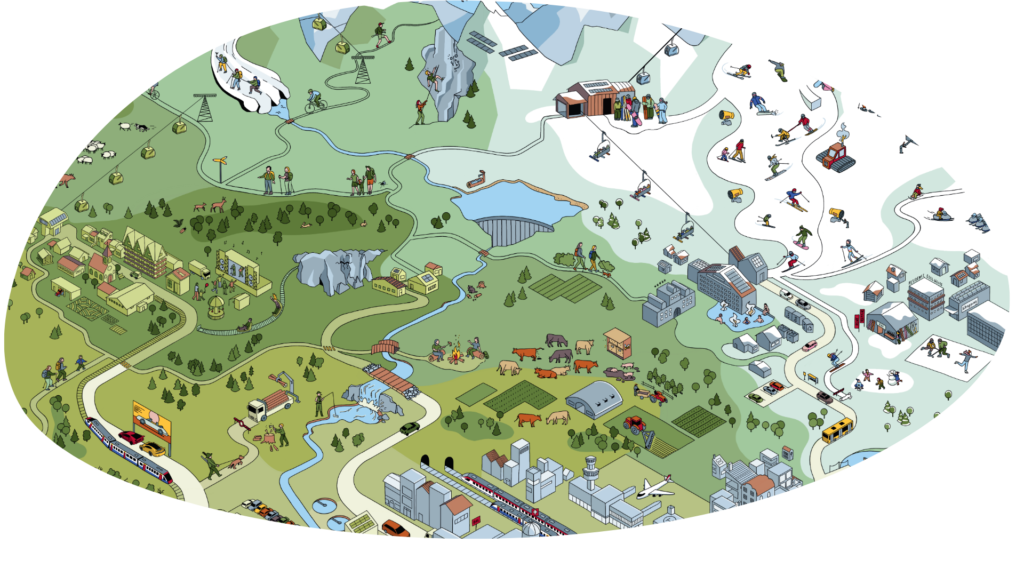
Mountain Tourism Fresco is a participatory serious game, workshop, and facilitation tool developed within the SWEET Lantern project. Its purpose is to support awareness-raising, dialogue, and collective reflection on the climate impacts of mountain tourism. Using a visual map, thematic cards, personas, and interactive discussion, the tool helps participants understand the links between tourism activities, greenhouse gas emissions, climate change effects in mountain areas, and possible mitigation and adaptation pathways
How to use it? Book a workshop with us to discover this game
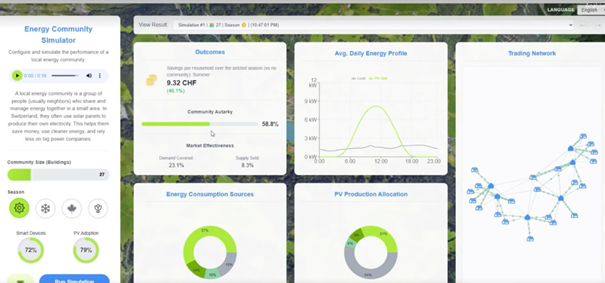
Gridly
It is a local electricity market modelling tool, based on the Swiss vZEV framework. It allows users to design a local electricity community (LEC) by choosing the size of the community (number of buildings), the percentage of members that are able to shift some of their load (apply a small degree of demand side management), the percentage of members that have PV generation and whether the members with PV also have a battery or not
How to use it? You can use the Gridly App
Sustainability Persona Cards
Representing the latest research on sustainability-relevant lifestyles, we developed a toolkit with practical instruments that support designing, targeting, and implementation of effective sustainability interventions. By combining an evidence-based lifestyle typology with decision support and co-creation methods, the toolkit assists policymakers, practitioners, and researchers in developing tailored sustainability interventions addressing the specific preferences, needs, and capabilities of the different lifestyle types in the Swiss population.
How to use it? Follow the steps on the website
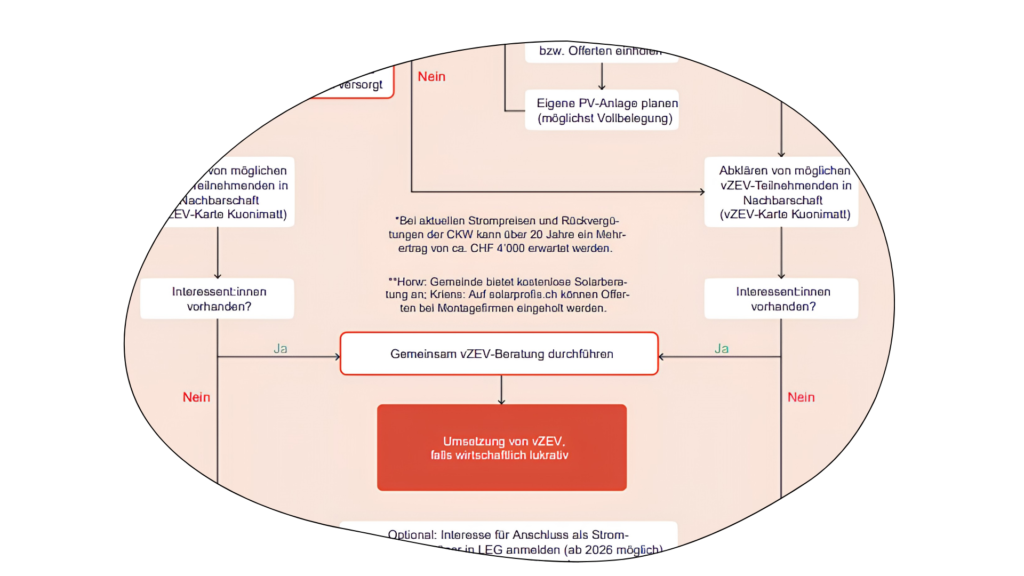
Decision tree for planning Solar installations and shared use of solar power
Decision trees for heating and electricity are practical, user-friendly guidance tools designed to turn complex technical, economic and regulatory questions into clear decision pathways. Through a series of simple questions, they help users assess their current situation, explore available options and identify appropriate next steps, from evaluating a building’s suitability and seeking expert advice to planning an installation or exploring shared energy solutions. While they do not replace professional advice, they provide a clear and structured starting point for making informed energy decisions.
How to use it? Follow the factsheet
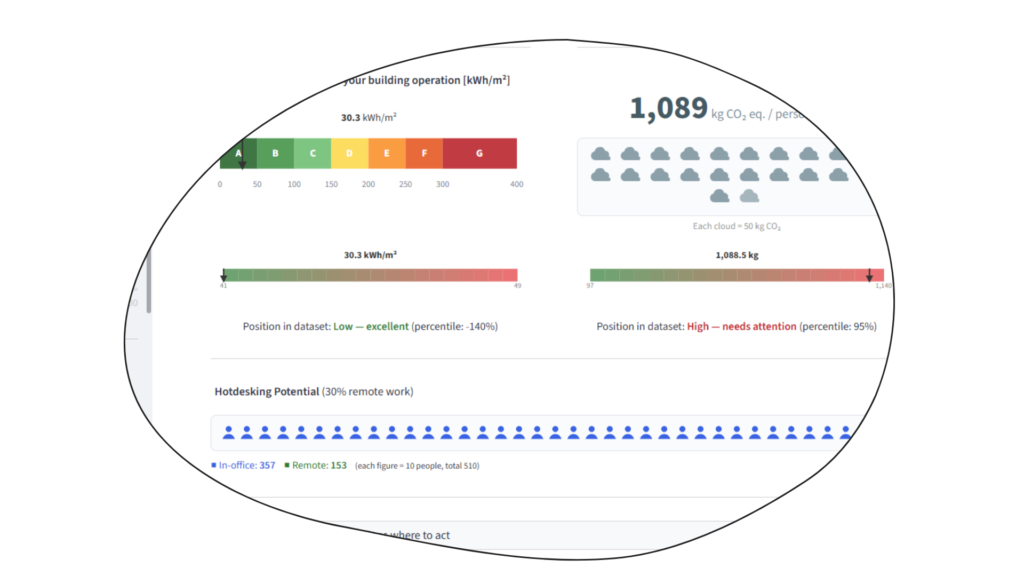
Working Model Navigator
The Working Model Navigator is an advanced simulation tool that combines EnergyPlus with custom Python-based analysis. It will enable SMEs to test different workplace scenarios and translate complex building-performance data into clear, quantified insights. By comparing the expected energy use and CO₂ emissions associated with different workplace policies, occupancy strategies and energy-saving measures, organisations can optimise space use and prioritise the investments with the greatest potential impact.
How to use it? Contact: sebastiano.maltese@supsi.ch