One energy transition, six very different people
Every mobility plan, grid tariff or energy campaign eventually lands on real people, and they do not all react the same way. A new cycle lane delights one resident and frustrates another. A dynamic tariff motivates one household and leaves the next one cold.
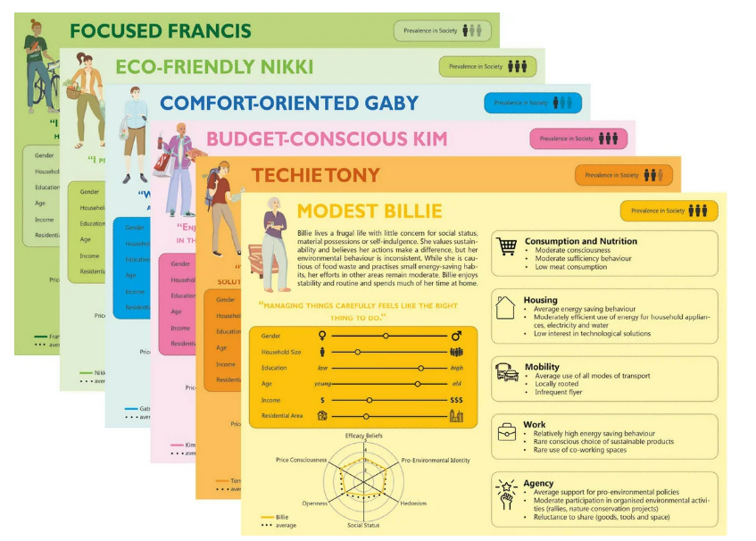
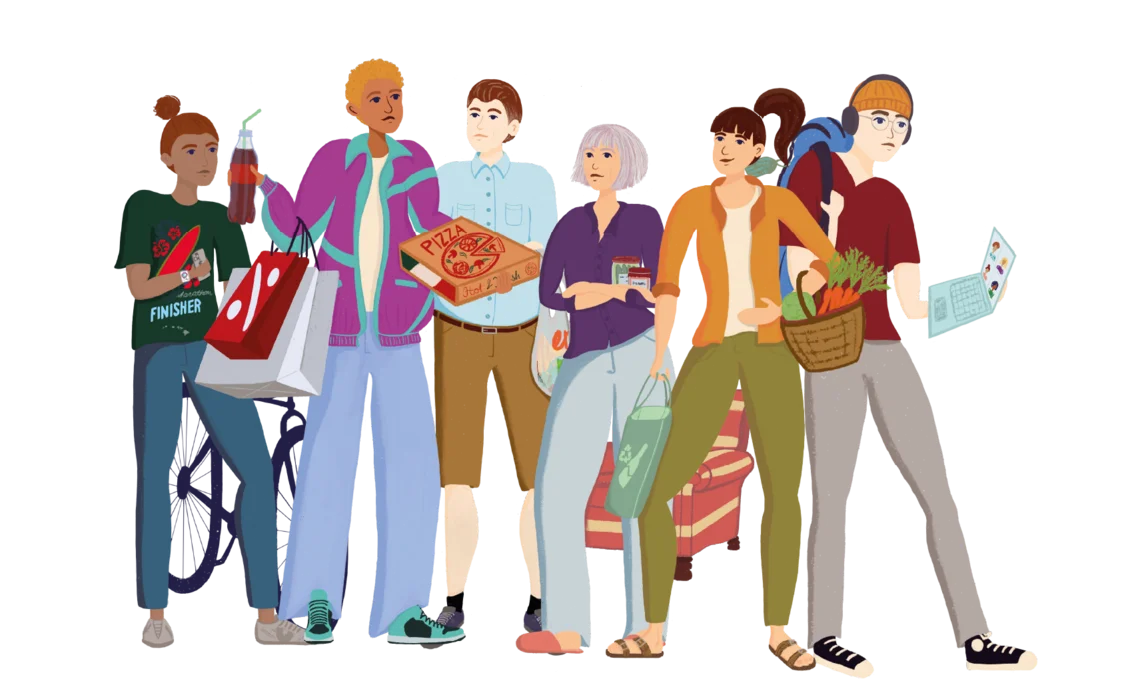
The Sustainability Persona Cards make this diversity visible in six faces. Starting now, each persona introduces themselves in a short video, available in English, French, German and Italian.
What are the Sustainability Persona Cards?
The cards are a science-based co-creation tool developed by the Energy Behaviour team of the ZHAW Institute of Sustainable Development. They build on the Swiss Sustainability Lifestyle Typology and a review of international research.
Each card turns research data into a person you can picture. It shows:
- A short portrait and a typical quote
- Socio-demographic tendencies: gender, household size, education, age, income, urban or rural living
- A spider diagram of six orientations: efficacy beliefs, pro-environmental identity, hedonism, social status, openness and price consciousness
- How common the persona is in Switzerland
- Typical behaviours in five domains: consumption and nutrition, housing, mobility, work, and agency
Meet the six personas
All six persona videos are online in English, French, German and Italian. Use them to open a workshop, brief your team or share the personas with your partners.
English
German
French
Italian
How to use the cards?
The cards work in co-creation workshops, living labs and innovation projects, and can be adapted to themes such as mobility, energy or food.
The personas help you design measures for everyone, not just the already convinced.
- Cities and communes: anticipate how residents will react to mobility or energy measures, and tailor them before they go public.
- DSOs: segment households for flexibility offers, smart meters and dynamic tariffs, from early adopter Tony to peak user Gaby.
- Sustainable development consultants: a ready-made, research-based tool that keeps end users present in client workshops.
1. Pick your personas. Choose the ones most relevant to your project, or use all six to cover the full range.
2. Give each persona a voice. Assign one card per table or participant and ask: how would Billie react to this?
3. Map barriers and drivers. Use the domain descriptions to identify what holds each persona back and what would motivate them.
4. Develop ideas and use cases. Design measures, services or messages for each persona, then check them against the others.
5. Adapt to your context. Use the cards as a base structure and add details specific to your municipality or project.